The glamour and gloom of glycogen synthase kinase-3.
Richard S Jope, Gail V W Johnson
Index: Trends Biochem. Sci. 29(2) , 95-102, (2004)
Full Text: HTML
Abstract
Glycogen synthase kinase-3 (GSK3) is now recognized as a key component of a surprisingly large number of cellular processes and diseases. Several mechanisms play a part in controlling the actions of GSK3, including phosphorylation, protein complex formation, and subcellular distribution. These are used to control and direct the far-reaching influences of GSK3 on cellular structure, growth, motility and apoptosis. Dysregulation of GSK3 is linked to several prevalent pathological conditions, such as diabetes and/or insulin resistance, and Alzheimer's disease. Therefore, much effort is currently directed towards understanding the functions and control of GSK3, and identifying methods capable of diminishing the deleterious impact of GSK3 in pathological conditions.
Related Compounds
| Structure | Name/CAS No. | Molecular Formula | Articles |
|---|---|---|---|
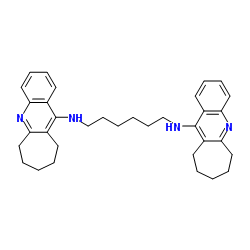 |
GSK-3 BETA
CAS:9059-09-0 |
C34H42N4 |
|
Selectivity and anti-Parkinson's potential of thiadiazolidin...
2015-06-17 [ACS Chem. Neurosci. 6 , 911-9, (2015)] |
|
Requirement for glycogen synthase kinase-3beta in cell survi...
2000-07-06 [Nature 406(6791) , 86-90, (2000)] |
|
Glycogen synthase kinase-3beta regulates cyclin D1 proteolys...
1998-11-15 [Genes Dev. 12(22) , 3499-511, (1998)] |
|
Progesterone receptor A stability is mediated by glycogen sy...
2013-09-06 [J. Biol. Chem. 288(36) , 26265-74, (2013)] |
|
N-terminal cleavage of GSK-3 by calpain: a new form of GSK-3...
2007-08-03 [J. Biol. Chem. 282(31) , 22406-13, (2007)] |