Journal of the American Chemical Society 2006-12-27

Synthesis and biological activity of PTEN-resistant analogues of phosphatidylinositol 3,4,5-trisphosphate.

Honglu Zhang, Nicolas Markadieu, Renaud Beauwens, Christophe Erneux, Glenn D Prestwich

Index: J. Am. Chem. Soc. 128(51) , 16464-5, (2006)

Full Text: HTML

Abstract

The activation of phosphatidylinositol 3-kinase (PI 3-K) and subsequent production of PtdIns(3,4,5)P3 launches a signal transduction cascade that impinges on a plethora of downstream effects on cell physiology. Control of PI 3-K and PtdIns(3,4,5)P3 levels is an important therapeutic target in treatments for allergy, inflammation, cardiovascular, and malignant human diseases. We designed metabolically stabilized, that is, phosphatase resistant, analogues of PtdIns(3,4,5)P3 as probes for long-lived potential agonists or potential antagonists for cellular events mediated by PtdIns(3,4,5)P3. In particular, two types of analogues were prepared containing phosphomimetics that would be selectively resistant to the lipid 3-phosphatase PTEN. The total asymmetric synthesis of the 3-phosphorothioate-PtdIns(3,4,5)P3 and 3-methylenephosphonate-PtdIns(3,4,5)P3 analogues is described. These two analogues showed differential binding to PtdIns(3,4,5)P3 binding modules, and both were potential long-lived activators that mimicked insulin action in sodium transport in A6 cells.

Related Compounds

Structure Name/CAS No. Articles
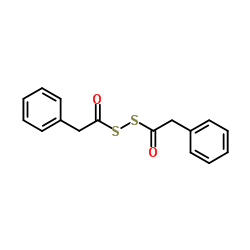
2-Phenylacetic dithioperoxyanhydride Structure 2-Phenylacetic dithioperoxyanhydride
CAS:15088-78-5