Chloracetamide-N-metholol: an example of an in vitro and in vivo clastogen which is non-mutagenic to Salmonella.
J Ashby, C R Richardson, P A Lefevre, R D Callander, J A Styles
Index: Mutat. Res. 156(1-2) , 19-32, (1985)
Full Text: HTML
Abstract
The industrial biocide chloracetamide-N-metholol (CAM) has been shown to be non-mutagenic to 6 strains of Salmonella using both the plate-incorporation and a pre-incubation test protocol. Its biocidal activity is unlikely to have influenced these results since Kathon 886, a more potent biocide, was concomitantly detected as mutagenic to strain TA100. In contrast, CAM was weakly clastogenic to human lymphocytes cultured in vitro and elicited a positive response in the mouse bone marrow micronucleus test when assayed using the intraperitoneal, but not the oral route of administration. A positive response was concomitantly observed for the rodent carcinogen and formaldehyde-releasing agent hexamethylphosphoramide (HMPA) in these 2 clastogenicity assays. Data are presented showing the slow hydrolysis of CAM to formaldehyde in vitro, and both [carbonyl-14C]CAM and [metholol-14C]CAM have been shown to interact covalently with calf-thymus DNA in vitro. It is concluded that CAM may be a direct-acting carcinogen to rodents, but that both the qualitative and quantitative outcome of its bioassay for carcinogenicity will be influenced critically by the bioassay protocol adopted; in particular, by the route of administration selected. These findings emphasize the need to complement the Salmonella gene-mutation assay with an in vitro assay for the induction of chromosomal aberrations if in vivo genotoxins are to be detected efficiently in vitro.
Related Compounds
| Structure | Name/CAS No. | Molecular Formula | Articles |
|---|---|---|---|
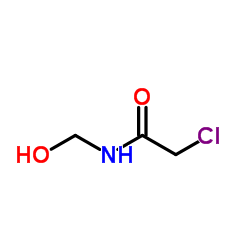 |
N-Methylolchloroacetamide
CAS:2832-19-1 |
C3H6ClNO2 |
|
Formaldehyde-releasers: relationship to formaldehyde contact...
2010-09-01 [Contact Dermatitis 63(3) , 129-39, (2010)] |
|
Formaldehyde-releasers: relationship to formaldehyde contact...
2009-08-01 [Contact Dermatitis 61(2) , 63-85, (2009)] |
|
Effect of Prolonged Repeated Exposure to Formaldehyde Donors...
2007-07-01 [J. Immunotoxicol. 4(3) , 239-46, (2007)] |
|
Adenosine analogues as selective inhibitors of glyceraldehyd...
2001-06-21 [J. Med. Chem. 44(13) , 2080-93, (2001)] |
|
Occupational contact dermatitis to N-methylol-chloracetamide...
1987-09-01 [Contact Dermatitis 17(3) , 182-4, (1987)] |