Current Allergy & Asthma Reports 2012-08-01

Current management options for hereditary angioedema.

Konrad Bork

Index: Curr. Allergy Asthma Rep. 12(4) , 273-80, (2012)

Full Text: HTML

Abstract

The aim of treatment of hereditary angioedema (HAE) due to C1 esterase inhibitor deficiency (HAE-C1-INH) is either treating acute attacks or preventing attacks by using prophylactic treatment. For treating acute attacks, plasma-derived C1 inhibitor (C1-INH) concentrates, a bradykinin B2 receptor antagonist, and a recombinant human C1-INH are available in Europe. In the United States, a plasma-derived C1-INH concentrate, a bradykinin B2 receptor antagonist, and a plasma kallikrein inhibitor have been approved. Fresh frozen plasma is also available for treating acute attacks. Short-term prophylactic treatment focuses on C1-INH and attenuated androgens. Long-term prophylactic treatments include attenuated androgens such as danazol, stanozolol, and oxandrolone, antifibrinolytics, and a plasma-derived C1-INH concentrate. Plasma-derived C1-INH and a bradykinin B2 receptor antagonist are permitted for self-administration and home therapy. The number of management options has increased considerably within the last few years, thus helping to diminish the burden of HAE.

Related Compounds

Structure Name/CAS No. Articles
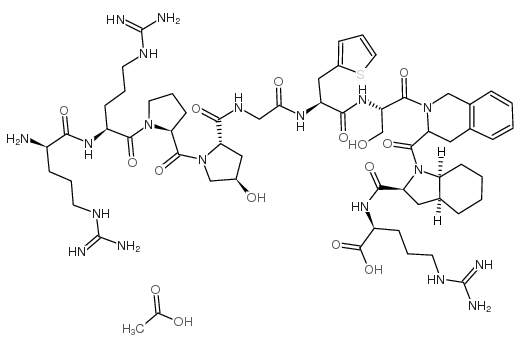
Icatibant acetate Structure Icatibant acetate
CAS:138614-30-9
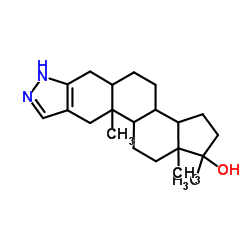
Stanozolol Structure Stanozolol
CAS:10418-03-8
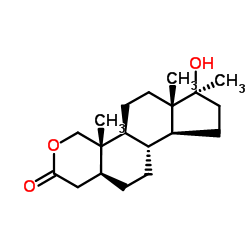
Oxandrolone Structure Oxandrolone
CAS:53-39-4
Danazol Structure Danazol
CAS:17230-88-5