Archives of Biochemistry and Biophysics 2006-11-01

Investigation of the role of cytochrome P450 2B4 active site residues in substrate metabolism based on crystal structures of the ligand-bound enzyme.

Cynthia E Hernandez, Santosh Kumar, Hong Liu, James R Halpert

Index: Arch. Biochem. Biophys. 455(1) , 61-7, (2006)

Full Text: HTML

Abstract

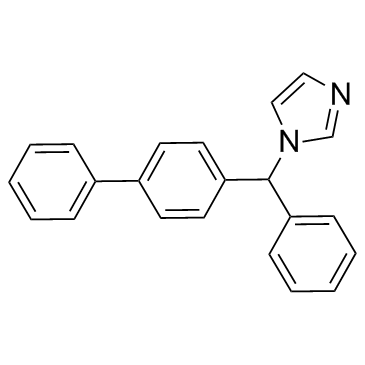
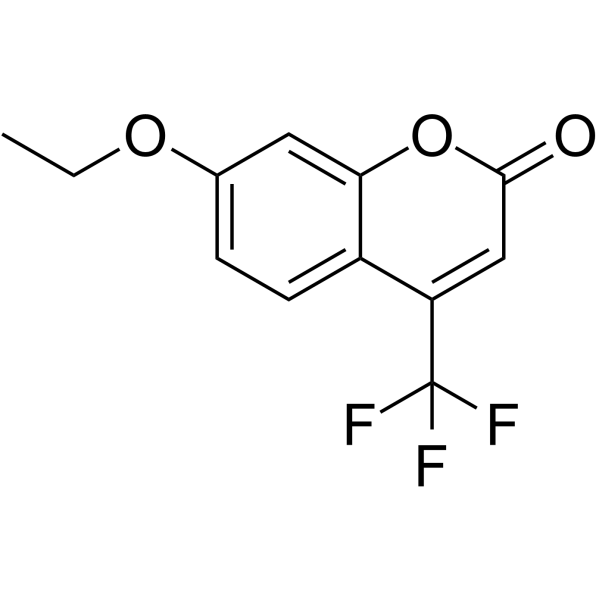
Based on the X-ray crystal structures of 4-(4-chlorophenyl)imidazole (4-CPI)- and bifonazole (BIF)-bound P450 2B4, eight active site mutants at six positions were created in an N-terminal modified construct termed 2B4dH and characterized for enzyme inhibition and catalysis. I363A showed a >4-fold decrease in differential inhibition by BIF and 4-CPI (IC(50,BIF)/IC(50,4-CPI)). F296A, T302A, I363A, V367A, and V477A showed a 2-fold decreased k(cat) for 7-ethoxy-4-trifluoromethylcoumarin O-deethylation, whereas V367A and V477F showed an altered K(m). T302A, V367L, and V477A showed >4-fold decrease in total testosterone hydroxylation, whereas I363A, V367A, and V477F showed altered stereo- and regioselectivity. Interestingly, I363A showed a 150-fold enhanced k(cat)/K(m) with testosterone, and yielded a new metabolite. Furthermore, testosterone docking into three-dimensional models of selected mutants based on the 4-CPI-bound structure suggested a re-positioning of residues 363 and 477 to yield products. In conclusion, our results suggest that the 4-CPI-bound 2B4dH/H226Y crystal structure is an appropriate model for predicting enzyme catalysis.

Related Compounds

Structure Name/CAS No. Articles
Bifonazole Structure Bifonazole
CAS:60628-96-8
7-Ethoxy-4-(trifluoromethyl)coumarin Structure 7-Ethoxy-4-(trifluoromethyl)coumarin
CAS:115453-82-2