Positive modulation of alpha7 nAChR responses in rat hippocampal interneurons to full agonists and the alpha7-selective partial agonists, 4OH-GTS-21 and S 24795.
Gretchen Y López-Hernández, Jeffrey S Thinschmidt, Philippe Morain, Caryn Trocme-Thibierge, William R Kem, Ferenc Soti, Roger L Papke
Index: Neuropharmacology 56(4) , 821-30, (2009)
Full Text: HTML
Abstract
One approach for the identification of therapeutic agents for Alzheimer's disease has focused on the research of alpha7 nAChR-selective agonists such as the partial agonists 3-(4-hydroxy,2-methoxybenzylidene)anabaseine (4OH-GTS-21) and, more recently, 2-[2-(4-bromophenyl)-2-oxoethyl]-1-methyl pyridinium (S 24795). An alternative approach for targeting alpha7 nAChR has been the development of positive modulators for this receptor. In this study we examined the interactions between full or partial agonists and positive modulators of alpha7 nAChRs in situ in brain tissue. Three positive modulators were used, 5-hydroxyindole (5-HI), 1-(5-chloro-2,4-dimethoxy-phenyl)-3-(5-methyl-isoxanol-3-yl)-urea (PNU-120596), and genistein. Whole-cell recordings were performed in stratum radiatum interneurons from rat brain slices. Hippocampal interneurons were stimulated by ACh, choline, S 24795, or 4OH-GTS-21, before and after bath perfusion with the positive modulators. 5-HI was not effective at potentiating 200 microM 4OH-GTS-21-evoked responses, however 5-HI induced a sustained potentiation of responses evoked by 30 microM 4OH-GTS-21. When 1 mM ACh and 200 microM 4OH-GTS-21 were applied alternately alpha7-mediated responses to both agonists were reduced, suggesting that high concentration of 4OH-GTS-21 produces residual inhibition or desensitization and that 5-HI is not effective at overcoming receptor desensitization. Similar results were obtained with alpha7 receptors expressed in Xenopus oocytes. Interestingly, responses evoked by S 24795 were potentiated by 5-HI but not by genistein. Additionally, PNU-120596 was able to potentiate alpha7-mediated responses, regardless of the nature of the agonist. We demonstrated that the potentiation of alpha7 nAChR response would depend on the nature and the effective concentration of the agonist involved and its particular interaction with the positive modulator.
Related Compounds
| Structure | Name/CAS No. | Molecular Formula | Articles |
|---|---|---|---|
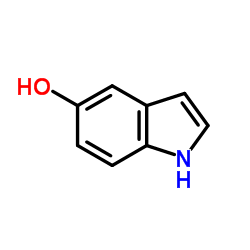 |
5-Indolol
CAS:1953-54-4 |
C8H7NO |
|
Validation and application of an UPLC-MS/MS method for the q...
2014-10-01 [Forensic Sci. Int. 243 , 117-25, (2014)] |
|
A separation of tyramine on a 2-(4-methoxyphenyl)ethylamine ...
2016-03-23 [Talanta 129 , 155-64, (2014)] |
|
Determination of selected synthetic cannabinoids and their m...
2016-04-01 [Talanta 150 , 568-76, (2016)] |
|
Stereoselective effect of kynurenine enantiomers on the excr...
2010-02-01 [Chirality 22(2) , 258-61, (2010)] |
|
[Development of novel fluorescence-derivatization-HPLC metho...
2011-01-01 [Yakugaku Zasshi 131(8) , 1207-11, (2011)] |