2-methyltetrahydrofuran--lithium hexafluoroarsenate: a superior electrolyte for the secondary lithium electrode.
V R Koch, J H Young
Index: Science 204(4392) , 499-501, (1979)
Full Text: HTML
Abstract
Rechargeable, high energy density lithium batteries require an efficient lithium electrode. Earlier work with electrolytes based on propylene carbonate, methyl acetate, and tetrahydrofuran yielded poor lithium electrode cycling efficiencies because of electrolyte reduction by lithium. Solutions of lithium hexafluoroarsenate in 2-methyltetrahydrofuran are found to be remarkably stable toward lithium, resulting in cycling efficiencies that approach 98 percent. The ability of 2-methyltetrahydrofuran to resist reduction by lithium is thought to be based on the position of its lowest unfilled molecular orbital relative to that of tetrahydrofuran.
Related Compounds
| Structure | Name/CAS No. | Molecular Formula | Articles |
|---|---|---|---|
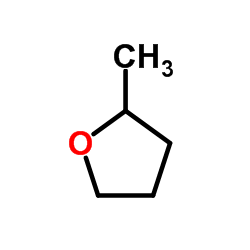 |
2-Methyltetrahydrofuran
CAS:96-47-9 |
C5H10O |
|
On-line monitoring of continuous flow chemical synthesis usi...
2014-10-01 [J. Am. Soc. Mass Spectrom. 25(10) , 1794-802, (2014)] |
|
Efficient synthesis of phosphatidylserine in 2-methyltetrahy...
2013-01-10 [J. Biotechnol. 163(1) , 45-9, (2013)] |
|
Temperature dependence of charge separation and recombinatio...
2011-06-29 [J. Am. Chem. Soc. 133(25) , 9863-71, (2011)] |
|
2-Methyltetrahydrofuran (2-MeTHF): A Biomass-Derived Solvent...
[ChemSusChem 5(8) , 1369-1379, (2012)] |
|
Solvent applications of 2-methyltetrahydrofuran in organomet...
[Org. Process Res. Dev. 11(1) , 156-159, (2007)] |