International Journal of Nanomedicine 2015-01-01

Biocompatible and biodegradable fibrinogen microspheres for tumor-targeted doxorubicin delivery.

Jae Yeon Joo, Gil Yong Park, Seong Soo A An

Index: Int. J. Nanomedicine 10 Spec Iss , 101-11, (2015)

Full Text: HTML

Abstract

In the development of effective drug delivery carriers, many researchers have focused on the usage of nontoxic and biocompatible materials and surface modification with targeting molecules for tumor-specific drug delivery. Fibrinogen (Fbg), an abundant glycoprotein in plasma, could be a potential candidate for developing drug carriers because of its biocompatibility and tumor-targeting property via arginine-glycine-aspartate (RGD) peptide sequences. Doxorubicin (DOX), a chemotherapeutic agent, was covalently conjugated to Fbg, and the microspheres were prepared. Acid-labile and non-cleavable linkers were used for the conjugation of DOX to Fbg, resulting in an acid-triggered drug release under a mild acidic condition and a slow-controlled drug release, respectively. In vitro cytotoxicity tests confirmed low cytotoxicity in normal cells and high antitumor effect toward cancer cells. In addition, it was discovered that a longer linker could make the binding of cells to Fbg drug carriers easier. Therefore, DOX-linker-Fbg microspheres could be a suitable drug carrier for safer and effective drug delivery.

Related Compounds

Structure Name/CAS No. Articles
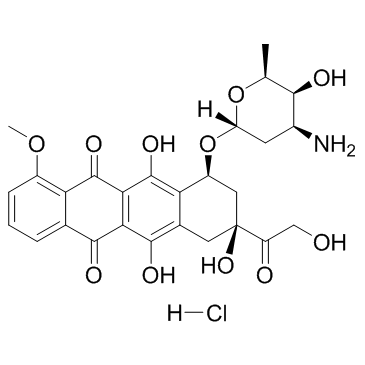
Doxorubicin Hydrochloride Structure Doxorubicin Hydrochloride
CAS:25316-40-9
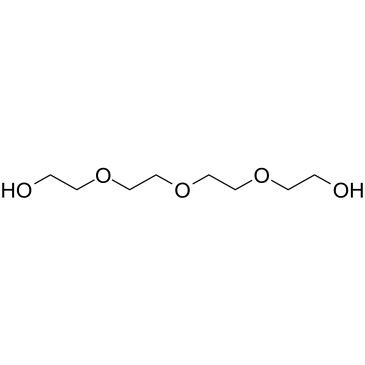
2,2'-((Oxybis(ethane-2,1-diyl))bis(oxy))diethanol Structure 2,2'-((Oxybis(ethane-2,1-diyl))bis(oxy))diethanol
CAS:112-60-7