Oncogene 2015-03-12

KAP regulates ROCK2 and Cdk2 in an RNA-activated glioblastoma invasion pathway.

H Li, X Jiang, Y Yu, W Huang, H Xing, N Y Agar, H W Yang, B Yang, R S Carroll, M D Johnson

Index: Oncogene 34(11) , 1432-41, (2015)

Full Text: HTML

Abstract

Aberrant splicing of the cyclin-dependent kinase-associated phosphatase, KAP, promotes glioblastoma invasion in a Cdc2-dependent manner. However, the mechanism by which this occurs is unknown. Here we show that miR-26a, which is often amplified in glioblastoma, promotes invasion in phosphatase and tensin homolog (PTEN)-competent and PTEN-deficient glioblastoma cells by directly downregulating KAP expression. Mechanistically, we find that KAP binds and activates ROCK2. Thus, RNA-mediated downregulation of KAP leads to decreased ROCK2 activity and this, in turn, increases Rac1-mediated invasion. In addition, the decrease in KAP expression activates the cyclin-dependent kinase, Cdk2, and this directly promotes invasion by increasing retinoblastoma phosphorylation, E2F-dependent Cdc2 expression and Cdc2-mediated inactivation of the actomyosin inhibitor, caldesmon. Importantly, glioblastoma cell invasion mediated by this pathway can be antagonized by Cdk2/Cdc2 inhibitors in vitro and in vivo. Thus, two distinct RNA-based mechanisms activate this novel KAP/ROCK2/Cdk2-dependent invasion pathway in glioblastoma.

Related Compounds

Structure Name/CAS No. Articles
1,1'-Dioctadecyl-3,3,3',3'-tetramethylindocarbocyanine perchlorate Structure 1,1'-Dioctadecyl-3,3,3',3'-tetramethylindocarbocyanine perchlorate
CAS:41085-99-8
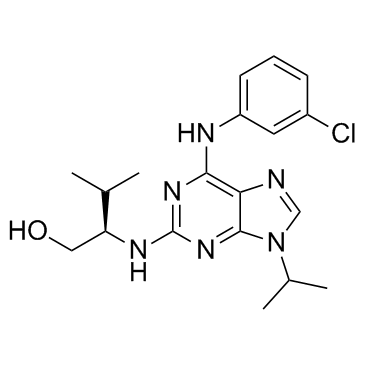
Purvalanol A Structure Purvalanol A
CAS:212844-53-6