Cytometry Part A 2015-04-01

Evaluating the efficiency of isotope transmission for improved panel design and a comparison of the detection sensitivities of mass cytometer instruments.

Sabine Tricot, Mickael Meyrand, Chiara Sammicheli, Jamila Elhmouzi-Younes, Aurélien Corneau, Sylvie Bertholet, Marie Malissen, Roger Le Grand, Sandra Nuti, Hervé Luche, Antonio Cosma

Index: Cytometry. A 87(4) , 357-68, (2015)

Full Text: HTML

Abstract

The recent introduction of mass cytometry, a technique coupling a cell introduction system generating a stream of single cells with mass spectrometry, has greatly increased the number of parameters that can be measured per single cell. As with all new technology there is a need for dissemination of standardization and quality control procedures. Here, we characterize variations in sensitivity observed across the mass range of a mass cytometer, using different lanthanide tags. We observed a five-fold difference in lanthanide detection over the mass range and demonstrated that each instrument has its own sensitivity pattern. Therefore, the selection of lanthanide combinations is a key step in the establishment of a staining panel for mass cytometry-based experiments, particularly for multicenter studies. We propose the sensitivity pattern as the basis for panel design, instrument standardization and future implementation of normalization algorithms.© 2015 International Society for Advancement of Cytometry.

Related Compounds

Structure Name/CAS No. Articles
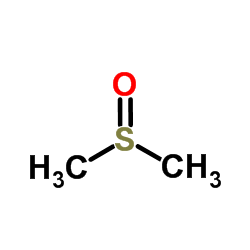
Dimethyl sulfoxide Structure Dimethyl sulfoxide
CAS:67-68-5
Dysprosium Structure Dysprosium
CAS:7429-91-6
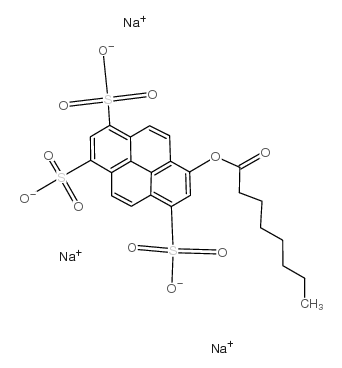
8-Octanoyloxypyrene-1,3,6-trisulfonic acid trisodium salt Structure 8-Octanoyloxypyrene-1,3,6-trisulfonic acid trisodium salt
CAS:115787-84-3