Journal of Pharmaceutical and Biomedical Analysis 2009-10-15

Halogenation effects of pheniramines on the complexation with beta-cyclodextrin.

Li-Fen Wang

Index: J. Pharm. Biomed. Anal. 50(3) , 392-6, (2009)

Full Text: HTML

Abstract

This study investigated the inclusion complexes of beta-cyclodextrin with pheniramine and its halogenated derivatives chlorpheniramine and brompheniramine both experimentally and theoretically to characterize the effects of a halogenated phenyl ring on the intermolecular interactions. Fourier transform infrared and nuclear magnetic resonance (NMR) experiments provided evidence of the formation of inclusion complexes and NMR were conducted to evaluate the apparent binding constants. The two-layered hybrid ONIOM method, ONIOM(B3LYP/6-31G(d):PM3), was adopted to optimize the geometry. The linear relationships between the calculated and experimental values for frequencies (with a scaling factor of 0.96) and for magnetic properties (with a scaling factor of 1.05) demonstrate that the quantum chemical calculations were consistent with the experimental spectra. Additionally, the calculated binding energies were consistent with the experimental results: the stability order of the complexes and the trend of the binding energy is: brompheniramine>chlorpheniramine>pheniramine; S-enantiomer>R-enantiomer. Natural Bond Orbital analysis further demonstrated three major electronic delocalizations--from the substituent on the phenyl moiety of pheniramine to beta-CD and from beta-CD to the phenyl and amine moieties in pheniramine--which were the dominant intermolecular forces that were responsible for the substantially different binding strengths. Geometrical data and the partial charge distribution obtained by NBO analysis are provided as supplementary data.

Related Compounds

Structure Name/CAS No. Articles
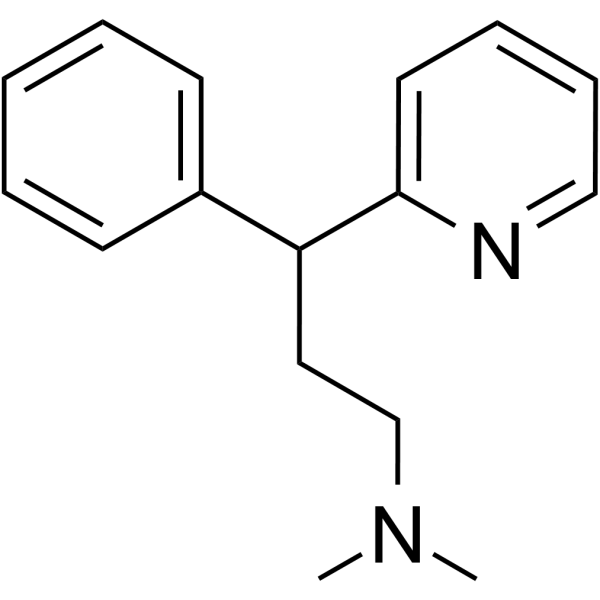
Pheniramine Structure Pheniramine
CAS:86-21-5
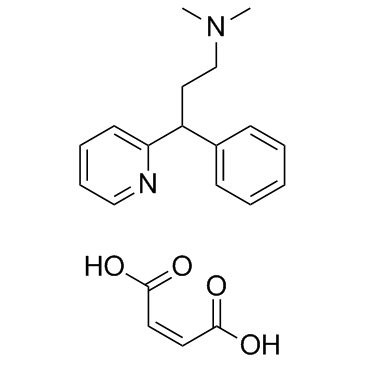
Pheniramine maleate Structure Pheniramine maleate
CAS:132-20-7
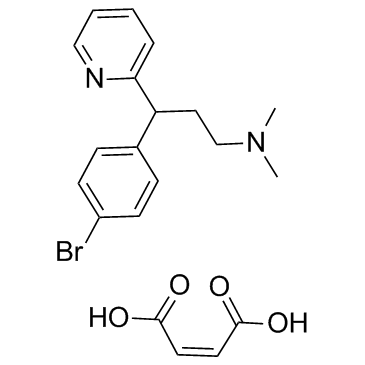
Brompheniramine Maleate Structure Brompheniramine Maleate
CAS:980-71-2