Journal of Organic Chemistry 2013-04-19

Zinc catalyzed and mediated asymmetric propargylation of trifluoromethyl ketones with a propargyl boronate.

Daniel R Fandrick, Jonathan T Reeves, Johanna M Bakonyi, Prasanth R Nyalapatla, Zhulin Tan, Oliver Niemeier, Deniz Akalay, Keith R Fandrick, Wolfgang Wohlleben, Swetlana Ollenberger, Jinhua J Song, Xiufeng Sun, Bo Qu, Nizar Haddad, Sanjit Sanyal, Sherry Shen, Shengli Ma, Denis Byrne, Ashish Chitroda, Victor Fuchs, Bikshandarkoil A Narayanan, Nelu Grinberg, Heewon Lee, Nathan Yee, Michael Brenner, Chris H Senanayake

Index: J. Org. Chem. 78(8) , 3592-615, (2013)

Full Text: HTML

Abstract

The development of zinc-mediated and -catalyzed asymmetric propargylations of trifluoromethyl ketones with a propargyl borolane and the N-isopropyl-l-proline ligand is presented. The methodology provided moderate to high stereoselectivity and was successfully applied on a multikilogram scale for the synthesis of the Glucocorticoid agonist BI 653048. A mechanism for the boron-zinc exchange with a propargyl borolane is proposed and supported by modeling at the density functional level of theory. A water acceleration effect on the zinc-catalyzed propargylation was discovered, which enabled a catalytic process to be achieved. Reaction progress analysis supports a predominately rate limiting exchange for the zinc-catalyzed propargylation. A catalytic amount of water is proposed to generate an intermediate that catalyzes the exchange, thereby facilitating the reaction with trifluoromethyl ketones.

Related Compounds

Structure Name/CAS No. Articles
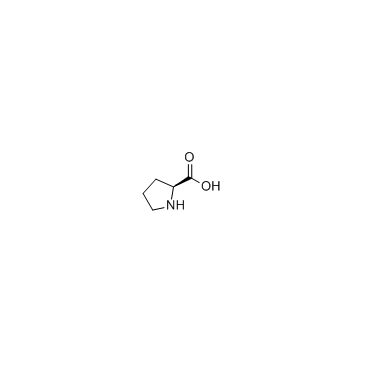
Proline Structure Proline
CAS:147-85-3
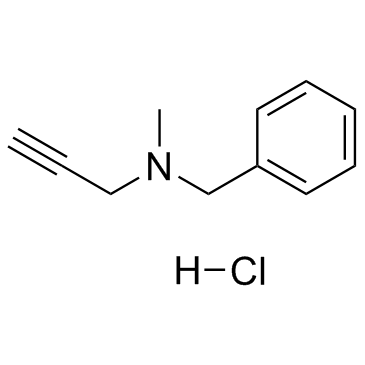
pargyline hydrochloride Structure pargyline hydrochloride
CAS:306-07-0