Cover Picture: Catalytic Activity of Microbially-formed Palladium Nanoparticles (Electroanalysis 2/2018)
Sarah A. Yang, Akira Nordmeier, Dev Chidambaram
Index: 10.1002/elan.201880201
Full Text: HTML
Abstract
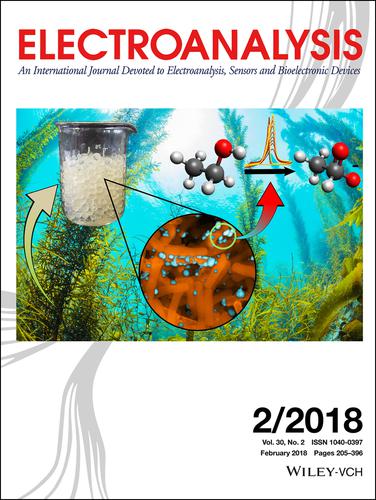
The cover picture shows a process in which Clostridium pasteurianum BC1 was immobilized into a matrix of seaweed-derived alginate shaped in the form of beads. These immobilized bacteria were functionally active and reduced soluble Pd to form Pd nanoparticles (as shown in the colored SEM image. These biologically formed Pd nanoparticles were found to be catalytic and exhibited an average electrochemical mass activity for ethanol oxidation that was almost twice the activity of the abiotically formed controls. More details are discussed in the article by Dev Chidambaram, Sarah Yang, and Akira Nordmeier. DOI: 10.1002/elan.201700530