Evaluation of RGD functionalization in hybrid hydrogels as 3D neural stem cell culture systems
Emanuele Mauri, Alessandro Sacchetti, Nunzio Vicario, Luca Peruzzotti-Jametti, Filippo Rossi, Stefano Pluchino
Index: 10.1039/C7BM01056G
Full Text: HTML
Abstract
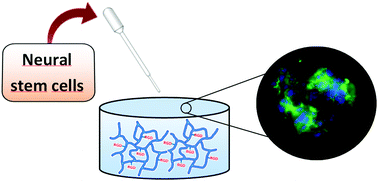
The use of neural stem cells (NSCs) in cell therapy has become a powerful tool used for the treatment of central nervous system diseases, including traumatic brain and spinal cord injuries. However, a significant drawback is related to the limited viability after transplantation in situ. The design of three-dimensional (3D) scaffolds that are capable of resembling the architecture and physico-chemical features of an extracellular environment could be a suitable approach to improve cell survival and preserve their cellular active phase over time. In this study, we investigated NSC adhesion and proliferation in hydrogel systems. In particular, we evaluated the effect of RGD binding domains on cell fate within the polymeric scaffold. The introduction of a tripeptide via hydrogel chemical functionalization improved the percentage of proliferating cells until 8 days after seeding when compared to the unmodified scaffold. The beneficial effects of this 3D culture system was further evident when compared to a NSC monolayer (2D) culture, resulting in an approximately 40% increase in cells in the active phases at 4 and 8 days, and maintained a difference of 25% until 21 days after seeding.