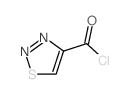
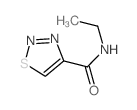
N-Alkyl-3-isothiazolones bearing a free 5-position are readily dimerized by base to 2, 4- bismethylene-1, 3-dithietanes. The dimerization mechanism involves attack by the 5-anion on the S N bond of a second molecule. The action of base on the corresponding N-acyl-3- isothiazolones affords only polymeric material, in a reaction which is evidently concerted with 5-anion formation. The potential role of thioketene intermediates is discussed.